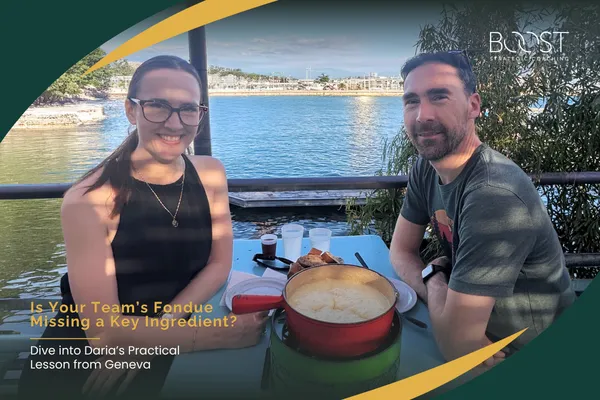
What Motivates Your Team? A Lesson from Geneva
This summer I got to spend two weeks in Europe. Gelato, cobblestone streets, phone on airplane mode - all the good things.
Part of the reason for the trip was the opportunity to attend a pre-conference workshop at the International Self-Determination Theory Conference in Geneva. A room full of psychologists digging into what motivates people? Exactly as nerdy as it sounds, and completely my kind of thing.
Self-Determination Theory (SDT) was developed by psychologists Edward Deci and Richard Ryan, and here's the Coles Notes: people aren't primarily driven by rewards and punishments. They're driven by an innate desire to grow. And that growth depends on three basic needs getting met: autonomy, competence, and relatedness.
I've built an ebook around this framework, because I think it explains more about why sales teams underperform than almost anything else I've studied. Sitting in Geneva this summer, listening to the research get even more specific, I kept thinking about the advisors and small business owners I coach. So here's the translation.
If your team is underperforming, check these three things before you touch compensation.
Autonomy isn't about letting people do whatever they want. It's about choices inside structure. Your team member doesn't need to invent their own CRM system, but they do need some say in how they get to their numbers. Dictate every move and you'll get compliance. Give them choices within boundaries and you'll get ownership.
Relatedness looks like this: you know that one of your advisors is going through a rough divorce, or that another just had their first kid, and you ask about it before you ask about their pipeline. Not in a performance review. In a hallway, on a call, in a two-line text that has nothing to do with their numbers. The advisors who feel like they belong to the practice, not just employed by it, are the ones who stick around when a competitor tries to poach them with more comp.
Competence is the one I see missed most in sales-driven businesses, because we assume people know what they’re doing after a short training window. They usually don't, and nobody ever told them that's normal. Give someone a clear, robust path to getting better at the job over time, and motivation follows. This is, not coincidentally, most of what I do in coaching. More competence does mean more motivation.
Here's the experience that made this click for me long before I ever set foot in Geneva. I’ve watched new coworkers hired into a sales role give up, not because they lacked skill, but because they were never supported long enough to feel like they had the skills, knowledge, and answers when they were sent out on their own to meet with prospects. Managers believed if they explained something once, the team could run with it. Then we’d watch someone quietly struggle for weeks because they didn't want to ask what they thought was an obvious question.
So before you raise base pay again to try to fix a motivation problem, ask which of the three is missing. Is your team choosing how they get to their goals, or just executing yours? Do they feel like people or like numbers? And have you spent enough time teaching them how to cook to make sure the fondue turns out right?
After a certain minimum level, money moves the needle less than most people in a sales-driven business expect. Clarity, connection, and an ongoing path to competence move it more. Most owners can feel that something's off on their team long before they can name which of the three is missing. That gap is what I work with you to pinpoint, from almost 26 years of watching this play out in other people's businesses.
Cheering you on, Daria

